New Jersey Budget Should Include Millionaires Tax

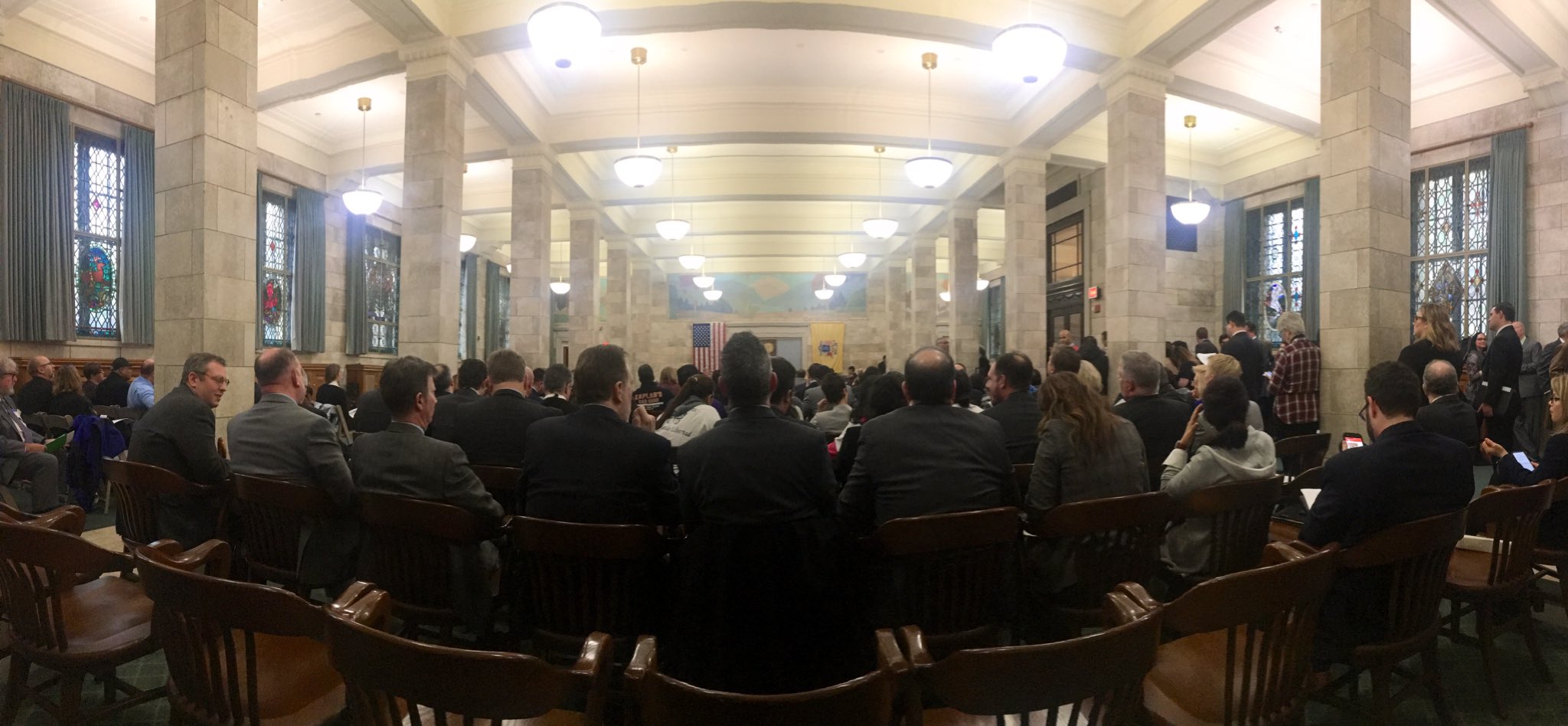
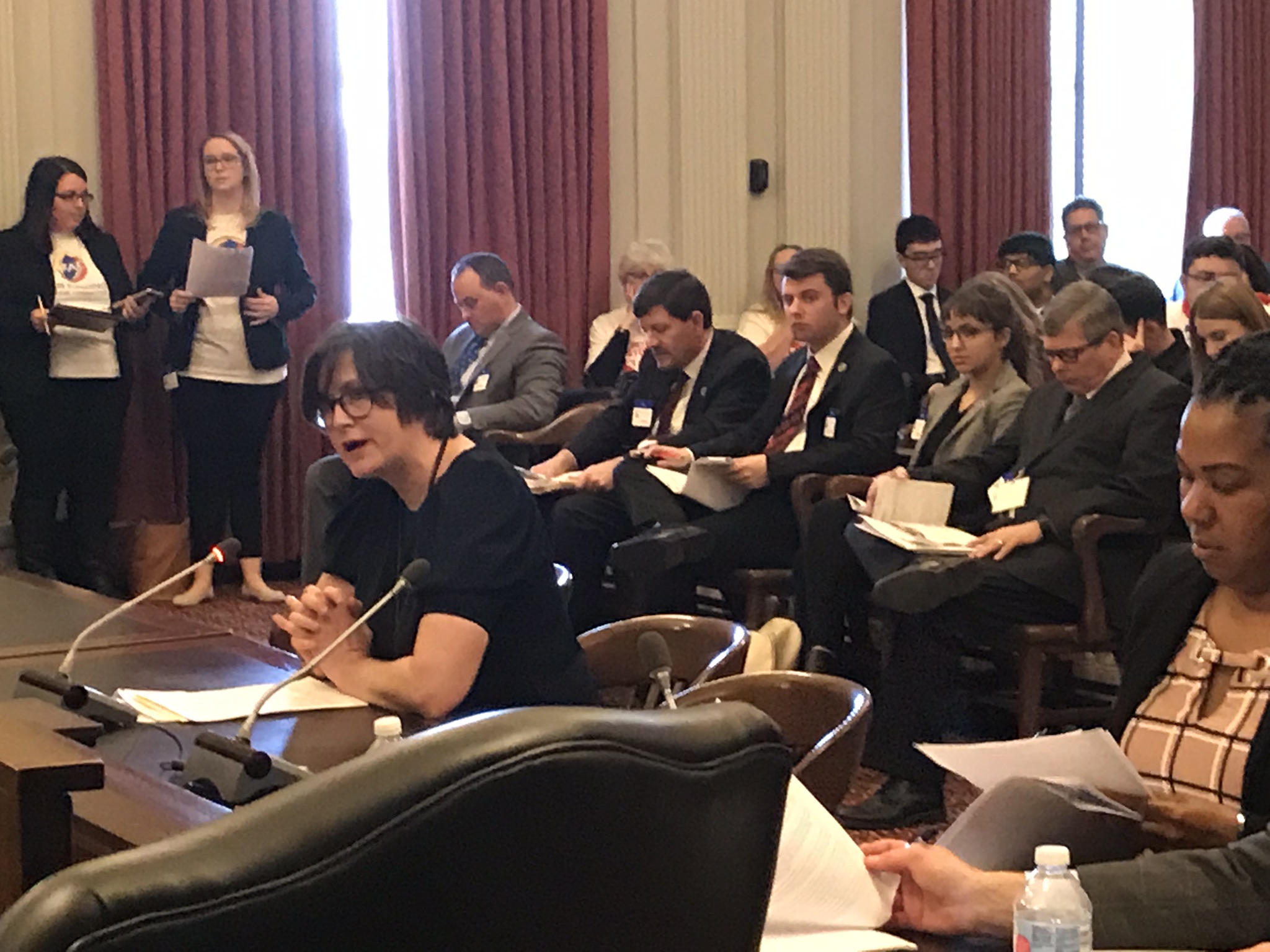
This testimony on the FY2020 New Jersey budget was delivered to the Assembly Budget Committee on Monday, March 20, 2019.

Good morning, Chairwoman Pintor Marin and members of the committee. Thank you for this opportunity to speak before you today. My name is Sheila Reynertson and I am a senior policy analyst at New Jersey Policy Perspective.

A decade after the Great Recession, New Jersey continues to struggle to bounce back. Revenue streams have chronically fallen short of spending needs leading to gimmicky fixes and funding raids. The Rainy Day Fund has been empty since 2009, a risky situation should New Jersey be slammed by another recession. Massive tax cuts for the wealthy and corporations have harmed the lives of everyday families and small businesses in many important ways, including higher college tuition costs and more expensive NJ Transit commutes.  

We approach the 2020 budget with two clear objectives in mind. First, raise sufficient revenue to meet the state’s necessary obligations, invest in the critical public assets that make New Jersey an attractive place to live and do business, and provide support for the most vulnerable members of our communities. Second, bring responsible budgeting practices back in vogue.

The centerpiece of Governor Murphy’s budget calls for applying the highest tax rate of 10.75 percent to annual earnings over $1 million, raising much needed new, sustainable revenue. We support this proposal and legislative leaders who have repeatedly passed it in the past should have no problem doing so today.

New, sustainable sources of revenue like the millionaire’s tax allows property tax relief programs to keep up with the cost of living, offering meaningful support to seniors and those living on a fixed income. That in turn frees up resources to help New Jersey’s neediest families by increasing the Work First NJ grant for basic assistance again this year. Renewable sources of revenue help lawmakers wean themselves off risky budgetary practices — like using the state surplus as a slush fund — that have contributed to 11 credit downgrades. It frees up resources for universal representation to help keep New Jersey families together in this age of extreme xenophobia. It helps fund the Earned Income Tax Credit increase, one of the most effective anti-poverty tools and recently found to be even more cost effective than originally thought. And, of course, sustainable revenue allows New Jersey to continue making critically important investments in state assets that all families rely upon every day like NJ Transit and institutions of higher education.

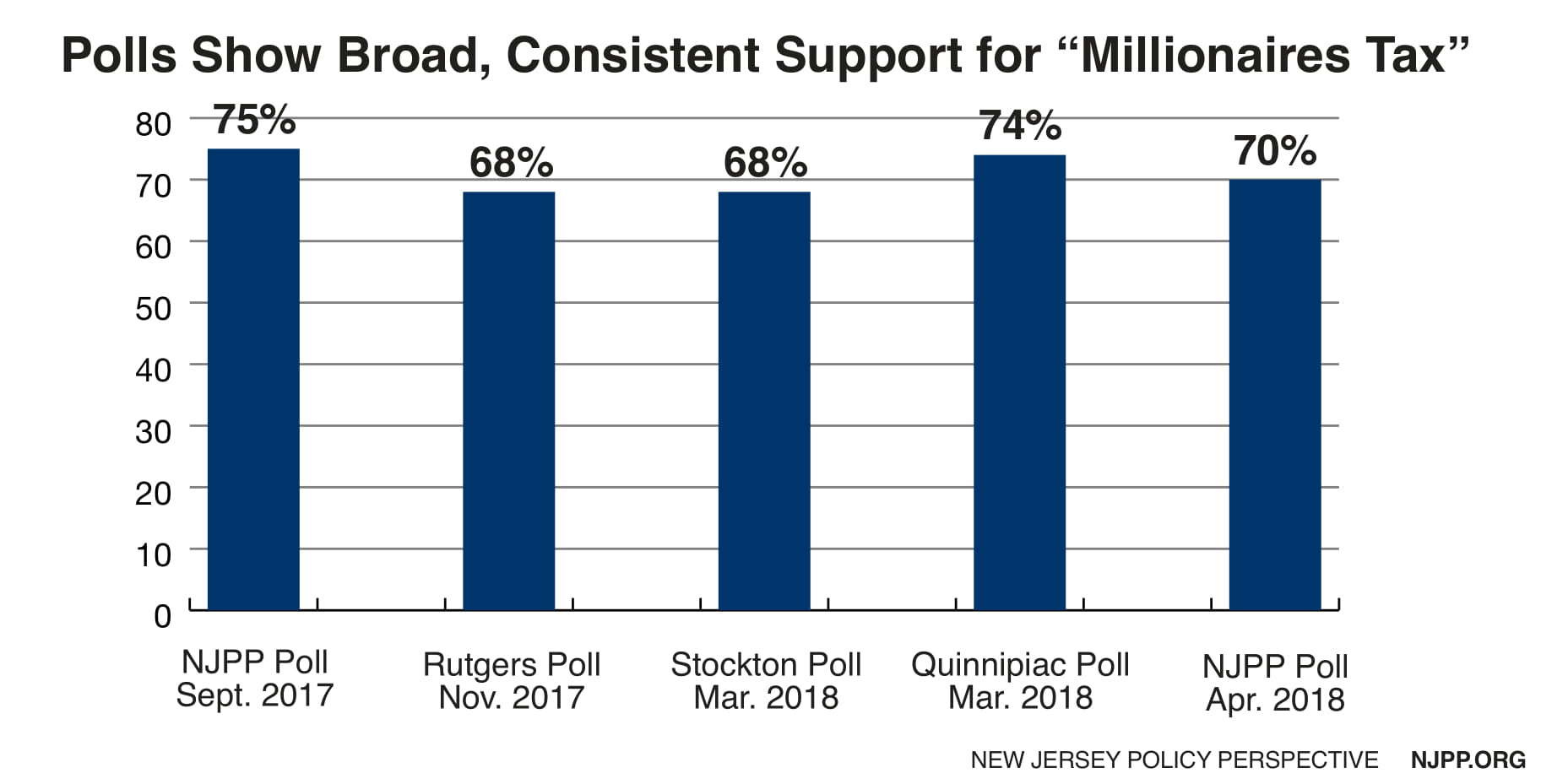
Concern that voters oppose taxing millionaires should be calmed by a diverse array of state-level polls consistently demonstrating strong support for a true millionaire’s tax among likely voters.

Any worry that wealthy taxpayers will flee New Jersey should be dismissed by peer-reviewed research findings, the vast majority of which show that raising the state income tax has a negligible effect on relocation decisions. The number of New Jersey taxpayers with incomes over $500,000 has consistently grown even as income tax rates on wealthy households have been increased twice. The share of these taxpayers grew an astonishing 450 percent, between 1994 and 2016, the most recent year for which data is publicly available. Millionaire tax flight is a myth, and that fact doesn’t go away when lawmakers hear anecdotal stories from estate planners.

What should worry representatives is that the top 1 percent of earners in the Garden State, who earn an average $1,582,000 a year, make 24.3 times more than what the bottom 99 percent makes. This level of inequality ranks New Jersey as 9th worst in the nation.

These high earners take home one fifth of all income made in the state. This is not far off from the state’s historical high, which peaked just before the Great Depression during the last Gilded Age. Yet today’s wealthy households in New Jersey pay a smaller share of their income in state and local taxes – 9.8 percent – than those in the middle 20 percent who, on average, earn $66,000 a year – 10.1 percent.

The millionaire’s tax, coupled with a strong commitment to phasing out gimmicky revenue raisers, ending raids of dedicated funds, and replenishing New Jersey’s surplus is the definition of a disciplined approach to this year’s budget. We also encourage the legislature to further this work by enacting consensus budget forecasting as a first step toward creating a comprehensive roadmap for sound long-term budget planning. Long-term planning that includes multi-year revenue and spending projections and more transparency might raise questions and issues that one-year budgeting intentionally avoids and, optimistically, break the cycle of accounting games and gimmicks that have dug New Jersey into this deep financial hole.

I’d like to close my testimony by addressing one last concern that some committee members may have. There is an assumption that a millionaire’s tax will somehow be unfair because New Jersey’s highest earners are already paying more in federal taxes with the loss of SALT deductions. However, nothing could be further from the truth. According to modeling conducted by the Institute on Taxation and Economic Policy, the top 1 percent of New Jersey taxpayers would still receive a sizable tax cut – from $2,500 to $3,200 – even with the SALT cap and Governor  Murphy’s proposed millionaire’s tax because other changes in the federal tax law are so disproportionately generous to wealthy households, like the corporate tax cut and the higher estate tax threshold.

Thank you for your time and attention.
Exorbitant EDA Subsidies Ignore Fiscal Realities

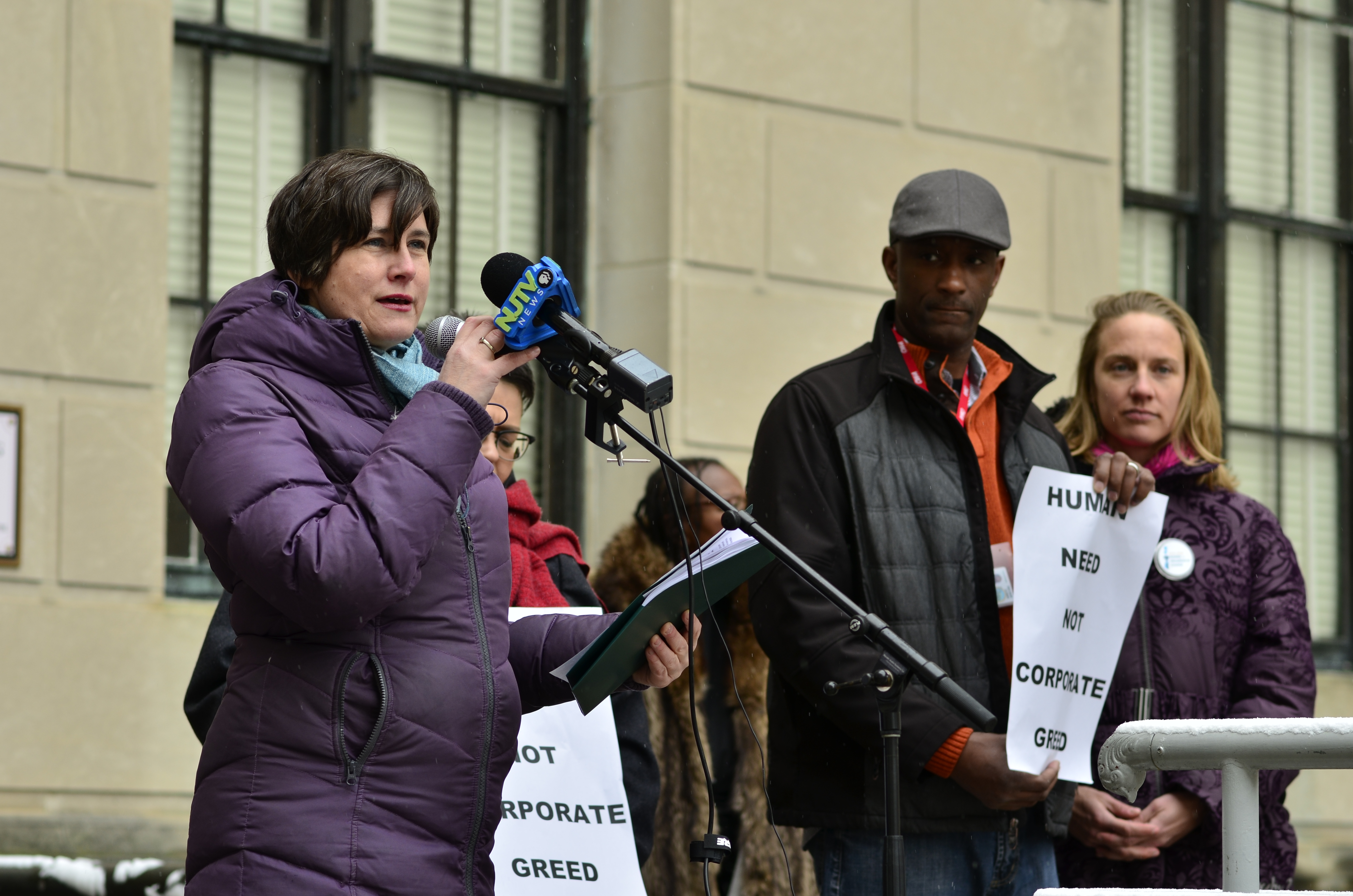
This testimony on the New Jersey Economic Development Authority subsidy programs was delivered to the Senate Economic Growth and Assembly Commerce and Economic Development Committees on Monday, February 11, 2019.

My name is Sheila Reynertson and I am a senior policy analyst at New Jersey Policy Perspective (NJPP), a nonpartisan research organization focused on state budget, tax and economic issues. Since NJPP’s inception in 1997, we have consistently raised concerns about the overreliance on business tax subsidies and have repeatedly called for stricter oversight of this economic development strategy.

As the latest iteration of corporate tax subsidy programs winds down and in light of the comptroller’s audit of the Economic Development Authority (EDA), NJPP’s position remains the same.

Based on our long-term analysis of both corporate tax subsidies and the precarious status of the state budget, the ends simply don’t justify the means. New Jersey was already in the midst of a financial crisis when the volume of awarded tax breaks was allowed to skyrocket. Once spending caps were lifted in 2013 under the Economic Opportunity Act, the EDA approved close to $6 billion in corporate tax breaks. Last year, McKinsey & Co. report stated that New Jersey’s tax subsidy programs pay more than five times as much as peer states for every dollar it attracts and every job created or retained.

That’s the kind of short-sighted game New Jersey simply can’t afford to play; especially not at the level it has, providing overly generous and exorbitant subsidies that are significantly out of step with what we see across the country and by comparable states.

Further, putting that kind of stock in tax subsidies to spur economic growth blatantly ignores the state’s precarious financial reality. In official documents submitted by the EDA during budget committee hearings in recent years, the authority projects that this over reliance on tax subsidies may result in a loss of over $1 billion a year in revenue starting in 2020 – at precisely the same time that the state’s biggest obligations are set to cripple the state budget.

None of this was hard to predict as anyone involved in these issues understood that New Jersey would be facing these tough situations relatively soon. And yet, the choice was made to gamble away future taxpayer dollars without getting a sufficient return on the investment. This has only made it more difficult to fund vital public services and invest in our state’s most important assets.

Some changes made in 2013 were positive – like more stringent standards for subsidies given to corporations shifting jobs around the state. But on the whole, the Economic Opportunity Act greatly expanded the size and scope of these offerings while eliminating several key financial protections for taxpayers and the State of New Jersey. Since then, the EDA took some measures as a partial course correction. Now, it’s the responsibility of the executive office and the legislature to implement real reform and get these tax breaks under control again.

Here are the most important ways to bring back accountability and oversight to business tax subsidy programs on behalf of New Jersey’s taxpayers.

First, restore spending caps on the total amount New Jersey can give in subsidies per year to ensure accountability and increase the legislature’s oversight role. Strict spending caps both ensure that New Jersey has a handle on its ability to track and assess awarded projects and that the overall program is again in line with comparable states. The caps put forth by the governor’s proposal is a great starting point, though we would argue they could and should be even lower.

New Jersey must get serious about reporting requirements. This should be done in a number of ways including a legislative fix to allow the Treasury to finally release the Unified Economic Development Budget which would provide annual data on large awarded subsidies – like the number and quality of jobs created. Design and implement a robust, independent evaluation process to determine on an ongoing basis if these tax breaks are having the desired effect. Require the EDA to post a more regular and longer-term analysis, say 15-year-forecasts, of the budget impact of already-approved subsidies. Lawmakers should also eliminate tax subsidies to retain existing jobs or at the very least limit such subsides for a large number of jobs that are supposedly at risk of moving to another state as proposed by the governor.

Finally, New Jersey must restrict corporations’ ability to sell their tax credits. The very idea of a secondary market for tax credits should give the legislature pause. New Jersey’s tax subsidy program is so overly generous that it enables the sellers to receive far more money in subsidies than they actually owe in taxes. New Jersey may regard these tax breaks as an effective way to entice large employers to relocate, but for those corporations – it’s just icing on the cake. Allowing them to not only sell their tax credits but to exempt that transaction from taxation is especially egregious. That’s like taking the time to research and find the perfect wedding present for a friend only to discover they sold it at a yard sale the following year. It’s time to end this practice.

There is no shortcut or silver bullet to improving our economy. It takes a long, sustained approach of targeted investments to produce balanced growth that spreads opportunity to all corners of the state. Tax subsidies can be a tool in this strategy, but for far too long New Jersey made them the strategy while critical assets suffered from disinvestment.

The state must reverse course now by adopting strong and sufficient reforms for its subsidy programs, adopting a long view on job creation and investing in the kinds of opportunities that have been proven over and over again to grow and sustain economies: high-quality K-12 education, higher education that is accessible to all, public-private partnerships centered on research institutions, as well as clean, safe communities and affordable, efficient transportation systems. These are the things that will continue to make New Jersey a magnet for research and enterprise and an attractive place to locate a business.

Thank you for your time and consideration. I’m happy to answer any questions you may have.


It’s Time for a $15 Minimum Wage

This testimony, on A15, was delivered to the Assembly Labor Committee on Thursday, January 24, 2019.

Good morning Mr. Chairman and members of the committee. Thank you for the opportunity to speak here today. My name is Brandon McKoy and I am the Director of Government and Public Affairs at New Jersey Policy Perspective.

NJPP has long been a strong supporter of raising the minimum wage to $15. The economic benefits for workers, their families, the business community and our state’s economy at large are significant and desperately needed. This proposal — bill A15 — will help approximately one million workers, almost one quarter of the state’s entire workforce, to better afford their needs and take care of the families.

Furthermore, these workers will now be able to more fully participate in our economy, meaning that the businesses of this state will benefit from a sizable increase in their customer base. When people can actually purchase their needs instead of putting them off due to poverty-level wages, businesses experience significant increases in revenue, helping grow and strengthen our economy.

It is no secret that New Jersey has been one of the slowest states to emerge from the Great Recession. When nearly a quarter of your workforce is earning poverty-level wages, it isn’t difficult to see why this is the case. This bill will help rectify this problem. It isn’t a silver bullet, and it won’t end poverty on its own, but it is a critical piece of the puzzle to tackling income inequality in this state.

That’s not to say there aren’t some shortfalls in this piece of legislation. The scenario for farm workers is far from certain as they may or may not see their wages rise to $15 by 2027. And the situation for tipped workers is not ideal either. While this bill increases their wages to $5.13 by 2022, it also increases the gap between the tipped wage and the general minimum wage by about 50 percent. New Jersey already has one of the largest gaps between the tipped and general minimum wage. To make it larger is not sound policy and invites increased instances of wage theft and workplace harassment for employees, especially women. As such, we also support bill A2903 which improves the state’s anti-wage theft laws in important ways, and we will continue to report on and advocate for improvements in these areas.

Poverty and income inequality tangibly harm millions of New Jerseyans. These two phenomena limit the freedom and liberty of our residents, weaken and destabilize our economy, and arrest our ability to deal with the many problems that we face as a state. Many people who testify today will try to convince you that this bill artificially inflates the minimum wage. They will say it goes too far too fast, and they will use terms like “wage mandates” to convince you that such a proposal is an encroachment on the freedoms of employers to determine what is best for them.

The fact of the matter is that had the federal minimum wage kept up with worker productivity over the past half century, it would be well above $20 by now – if anything, the minimum wage has been artificially deflated for decades. And when we look around and see so much poverty and struggle, and when we read analyses such as the ALICE report from the United Way of Northern New Jersey which shows us that 4 in 10 Garden State households are effectively working poor, we ought not be surprised at what we find.

This bill will be one of the most important, beneficial, and consequential pieces of legislation in this state’s history. It will help one million workers, make New Jersey a real competitor for workers in our region again, and inject nearly $4 billion into our economy – much of which will be spent in our local communities, helping to boost the fortunes of businesses on main street from Avondale to Waretown. This will be one of the best bills you could ever support in your career as a legislator.

As such, we urge you to support A15 and pass it through committee. Thank you for your time and consideration.

State of the State 2019: Rapid Reaction

Welcome to NJPP’s State of the State 2019: Rapid Reaction, your source for commentary and data analysis on Governor Murphy’s address. The transcript below was taken from a conversation in NJPP’s conference room and has been lightly edited.


Lou (Louis Di Paolo, Communications Director): In his first State of the State address, Governor Phil Murphy highlighted major initiatives signed into law over the last year and doubled down on his vision for a “stronger and fairer” New Jersey. From implementing paid sick days for over a million workers to providing equal access to financial aid for undocumented students, the governor outlined major policy victories in what he called a “productive year” with the Legislature.

He also spent a big portion of his speech on New Jersey’s economic subsidy programs. He opened by saying he was delivering a totally different speech from the one he planned on giving after reading the State Comptroller’s audit of the EDA. Did either of you expect the EDA audit to dominate the beginning of the governor’s speech?

Sheila (Sheila Reynertson, Senior Policy Analyst): No, but the timing was perfect. He took full advantage of the EDA audit to call out the state’s out of control tax subsidy programs.  This line stood out to me:

I see no lies here. New Jersey’s tax incentive programs operated without stringent oversight and left NJ taxpayers on the hook for $11 billion at a time they are constantly being told that there is not enough revenue to invest in higher education, mass transit and clean energy. I love that he put taxpayers front and center and called for putting caps on the amount of money the EDA gives out every year.

Brandon (Brandon McKoy, Director of Government Affairs): I definitely wasn’t expecting him to start out so strong on this issue out of the gate, but I’m glad he did. Getting right on subsidies is central to improving the state’s fiscal health, and it’s definitely something that the ratings agencies would like to see. For too many years New Jersey has been really irresponsible with these programs, and like Sheila says, voters are tired of hearing that we have tons of money available for already-wealthy and well-connected corporations but not enough to improve our schools or make major investments in NJ Transit. So thumbs up from me on the Gov talking about this issue so much today, it’s really important and he made that abundantly clear.

Lou: Fortunately, the state’s subsidy programs sunset at the end of the current fiscal year. Given the governor’s remarks, what do you think the future holds for the EDA? And what reforms have to happen to prevent another $11 billion from going out the door without proper oversight?

Sheila: Spending caps! This alone will be a great victory for accountability and oversight. I appreciated that the Governor’s remark about how there is a place for tax incentives to encourage businesses to invest in New Jersey, but in no way should they be the only strategy. I would have loved for him to connect more dots between the over-reliance on the tax incentives and the deep disinvestments to the proven tools that can help build a stronger economy: education, infrastructure and workforce development. Regardless, the reforms he highlighted are exactly the kind of fixes needed to rein in the program.

Brandon: I have nothing to add here. She covered it.

via GIPHY

Lou: That’s why Sheila makes the big bucks. But let’s focus on those who aren’t. This is the first time I can remember a sitting governor mention poverty in their State of the State address. What are your thoughts, Brandon? And where do we go from here?

Brandon: Looks like someone read my twitter feed! Yeah, after the speech ended I just thought for a moment about how many times the governor actually *said* the word “poverty” and was kind of taken aback by it, but in a good way.

It might sound silly, but I can’t tell you how many economic outlook presentation or fiscal analysis meetings I’ve been in where poverty isn’t mentioned even once. Considering how central poverty is to our economic fortunes and opportunities, it really is a huge oversight. So it was honestly refreshing to see the governor not only mention poverty as a challenge, but highlight it as something he wants to aggressively tackle and mitigate. There’s a lot of people who suffer from poverty in New Jersey — a lot more than most realize — so having the top elected official of the state understand that is a great thing to see.

Sheila: I agree! He also lifted up those who work full time or who work at multiple jobs just to make ends meet in New Jersey. “The working poor of New Jersey are no longer invisible. We see them.” That’s a game changer in a state that ignored TANF recipients for 31 years, in a state in need of a more realistic path toward a $15 minimum wage.

Lou: I’m not sure if you two caught this, but the Governor’s line on passing a $15 minimum wage bill received the biggest applause. I’m not sure if that’s because everyone in the room was clapping (I doubt that) or the advocates sitting in the gallery were making a lot of noise. Either way, there were reports that the Governor and legislative leaders were close to a deal on the minimum wage last month, but things have simmered since. NJPP has said many times that raising the minimum wage will boost the take home pay of over one million workers, but that assumes everyone is included. How bad are the carve outs proposed in Speaker Coughlin’s bill? And do you think the governor’s address got him any closer to a clean bill, without exemptions?

Brandon: I honestly don’t know if the remarks in this speech have helped improve the odds of a clean bill, but the fortunes of a clean bill really shouldn’t rely on the governor’s remarks in his State of the State, especially considering the legislature passed a clean bill on its own just a few years back. The carve outs in the Speaker’s bill are bad enough that most advocates, when they saw it, dismissed the proposal out of hand. The general wage gets to $15 by 2024, which is okay, but the carve outs are too broad and too slow. The bill carves out youth workers, seasonal workers, farm workers and small business workers at firms with 10 employees or less — and it doesn’t bring them to $15 until 2029, which is 10 years from now. That’s just way too long. It creates a permanent subclass of workers, doubling down on some of worst mistakes in US labor history, and fails to take the goal of tackling poverty seriously.

There’s also the problem of what it does for tipped workers. It increases the tipped wage from $2.13 to $5.13, but the gap between the tipped wage grows from $6.72 to $9.87. One of the things we’ve urged lawmakers to do is, at the very least, not increase the gap between the tipped wage and minimum wage. It creates all sorts of problems, invites greater instances of wage theft, and exacerbates income inequality. So the tipped wage piece of this bill is something we’re really going to have to improve. And, again, this could all be avoided if the legislature just introduced and passed the same clean bill that it did in 2016, the one that Governor Christie vetoed. Governor Murphy has said he would sign that bill, so it is really frustrating to see such good legislation get watered down so drastically. It’s really hurting our workers, businesses and the broader economy.

Sheila: What Brandon said. But wasn’t the biggest applause line the restored funding from Planned Parenthood and New Jersey having the nation’s strongest equal-pay law, Lou? Hooray for treating women like people!! Lol.

Lou: Treating women like people — what a radical concept! But let’s pivot to what wasn’t included in the speech. Rapid response: were you surprised by any policy areas that weren’t included in the governor’s remarks?

Brandon: Didn’t hear a *whole* lot about reforms to the tax code or implementation of progressive tax policies like a true millionaire’s tax or the estate tax, but I guess those things are mostly saved for the budget address so it’s ultimately not too surprising.

Sheila: Codifying Roe v Wade and removing remaining barriers to contraception and abortion for uninsured and underinsured in the Trump/Kavanaugh era, expanding health care coverage for children regardless of immigration status, innovative ways to help low- to middle-income families with child care costs. Real talk about New Jersey’s empty rainy day fund putting the state in a precarious position should we be hit by another recession or superstorm.  

Brandon: Sheila is better at rapid response than I am. Didn’t hear much about working family tax credits either.

Lou: I’ll answer my own question. I was a little surprised we didn’t hear anything about a public bank. But we all knew that would be a heavy lift. But to wrap this up, I have two closing questions. 1) What policies are you most excited for in 2019? And 2) I had fun with this, so can we do another rapid reaction blog post for the budget address?

Brandon: I’m excited for getting some really good policies implemented, especially minimum wage. There’s a lot of energy out there right now for strong, progressive policies and I think a lot of New Jerseyans want and expect to see their elected officials working towards these goals on their behalf. I hope 2019 will be a good year for getting some things in place that we’ve been working on for a long time.

And progressive taxes. Definitely progressive taxes. Bring back the estate tax, reform the inheritance tax, restore the sales tax to 7 percent, and put in a *real* millionaire’s tax!

Lou: That’s an ambitious tax agenda. But a true millionaires tax is really, really popular among likely voters, so who knows? 

Either way, my fingers are crossed. Sheila?

Sheila: Getting paid family leave reforms across the finish line will be a huge moment. The program is underused by workers and many of the fixes will hopefully make an impact. And yes(!!!) to progressive taxation — it’s time to course correct previous mistakes and create a tax code that reflects reality. Take a true millionaire’s tax — it is long overdue in a state where the top earners have made the most income gains since the end of the last recession. Finally, I would love to see New Jersey take the lead on expanding health care regardless of immigration status. I could keep going….but it’s time to clock out.

Brandon: The next time we do this I expect to see more gifs.

Sheila: And Gritty memes.

Lou: Good point, Sheila. I bet more people will read this if we can tease that there’s a Gritty meme buried in here. BOOM!

via GIPHY


Revenue Certification Reform is Long Overdue

This testimony, on SCR-132, was delivered to the Senate Budget and Appropriations Committee on Monday, July 23, 2018.

Good afternoon.  My name is Gordon MacInnes, President of NJ Policy Perspective. I appreciate this opportunity to testify on this very important change to New Jersey’s Constitution.

NJPP – along with our national partners at the Center on Budget and Policy Priorities – has long supported the adoption of a consensus process for estimating state revenues. We are heartened to see the Senate President and his colleagues propose this first step toward establishing a joint legislative and executive branch Revenue Certification Board. More than half of the states – 28 – have adopted this sensible budget forecasting framework, which ensures both greater financial discipline and more robust and relevant debate about a state’s true financial condition.

Given the shaky record of New Jersey’s budgets, its second-lowest credit rating and the consequences of flawed revenue projections, a change in the revenue forecasting process is long overdue. Consensus forecasting is much more likely to mitigate the negative impact of short-sighted politics on budget-making and it may improve New Jersey’s prospects among the major bond rating agencies – an important priority following 11 credit rating downgrades in just eight years.

Take Connecticut as an example, one of the states to most recently adopt consensus forecasting after years of wasted time arguing over the best revenue estimates. Since new rules took effect in 2009, the legislature and governor have come to a consensus before the mandated deadline of November 10 each year and have used updated estimates to make mid-year appropriations adjustments.

Now consider current practices in New Jersey. Here, budget-making is an opaque and unnecessarily dramatic affair. Year after year, the Governor delivers the budget message in the winter.  The Legislature holds 30+ hearings in the spring summoning each cabinet officer and inviting interested organizations and citizens to offer their pleas and suggestions of the Governor’s proposal.  Then, the real budget negotiations take place behind closed doors in small rooms frequently in the very last hours of the fiscal calendar, and deals are struck without sufficient understanding of the agreements and their expected impact. The final budget is not even available for review and inspection by the legislators who must approve it, never mind interested citizens and lobbyists.

Adopting responsible and shared forecasting is a model of good governance and a smart framework for restoring sensible practice to budget-making. It is a key characteristic of states with high bond ratings, and Moody’s even includes the measure as one of the five “Financial Best Practices” it uses to rate states.

While we are heartened to see the concept of a revenue forecasting board being proposed, we strongly oppose the notion that such an important change requiring an amendment of the state constitution should be adopted with such scant notice or public review. The proposed change cannot possibly serve its meritorious purpose in New Jersey’s down-to-the-wire, secretive budget-making tradition.

Consider for a moment the adoption of this year’s budget.  After months of public hearings, the 2019 budget’s proposed revenue increases were tossed aside in the backroom negotiations. The legislature’s alternative budget was introduced on June 18 and passed by both houses on June 21. Following 9 days of negotiations, the governor’s line-item vetoes were accepted on July 1.

Now, consider how a three-person revenue board would manage to serve the purposes of SCR-132 if their first glance at substantial changes in proposed revenues was not possible until June 18.  Yes, the treasurer’s representative and OLS budget and finance director could work full-time around the clock to try to determine the longer-term consequences of a temporary corporate tax increase, but would they and the public member have sufficient time to prepare a helpful analysis that would be given any consideration by the legislative leadership in time for the July 1 deadline to be met? Obviously not.

Legislative leadership should slow this sudden and historic shift in the constitutional budget directives until next year so that the unanswered issues and questions can be addressed with calm deliberation. Otherwise, the same practices that have put New Jersey in such a deep financial hole will undermine and prevent any benefits expected from SCR-132.     

In the meantime, we recommend enacting a comprehensive roadmap for sound long-term budget planning including not only a thoughtfully designed revenue certification board, but also multi-year revenue and spending projections and greater transparency. In fact, the legislature passed a bill in late 2015 that incorporates these very budget practices: A4326/S2942 made it to Governor Christie’s desk where he vetoed it. It is a sound bill that deserves to be sent to the governor’s desk once again and we urge the legislature to do so.

We support bringing transparency to the budgeting process because it may raise questions and issues that one-year budgeting intentionally avoids and provides an opportunity to finally break the cycle of accounting games and gimmicks that have contributed greatly to New Jersey’s financial crisis. But pushing for a resolution that changes our constitution and demotes the governor’s revenue certification authority requires a comprehensive evaluation process that also values the participation and input of the public before moving forward to the ballot.

Thank you for your time.


New Jersey Should Replicate ACA Penalty to Keep Coverage Affordable

Below are prepared remarks delivered to the Senate Commerce Committee today on S-1877.

Thank you for the opportunity to testify on the need to preserve the individual health insurance market in New Jersey. While New Jersey has made major progress in reducing the uninsured, there are still about 700,000 New Jerseyans without coverage. Congress’ recent repeal of the shared responsibility penalty in the Affordable Care Act will undoubtedly cause that number to rise unless something is done.

This penalty provided an important incentive to ensure that younger, healthier people obtain insurance and spread the risk in the health insurance pool. Without robust participation of these individuals in our health insurance marketplace, premiums will climb and the market will become destabilized.

NJPP supports restoration of this requirement at the state level in New Jersey if steps are taken to also ensure that insurance is affordable. To achieve that goal we urge that S-1877 be amended to require that all revenues generated by the penalty be used only in ways that will make insurance more affordable, such as for state premium subsidies or to help fund reinsurance.

We also recommend that S-1878, which would establish a reinsurance plan and is also being considered by the committee today, be passed at the same time. We believe that the combination of these bills would create a synergy that would substantially reduce premiums for New Jerseyans. It would also be smart to allocate at least $2 million for outreach to make insurance more accessible, attract healthier people, and maximize federal funds.[1]

Because insurers need time to adjust their rates for next year, this has become an urgent matter. Unless legislation is enacted within the next four months to address this problem, next year about 150,000 middle class New Jerseyans will have to spend much more in premiums, thousands more will become uninsured, state charity care payments will increase and New Jersey will lose federal Medicaid funds.

Unfortunately, some of this is already happening. Even before the federal penalty was repealed, premiums for most plans this year in New Jersey went up by 8.5 percent[2] (as part of an overall increase of 22 percent[3]) because the Trump administration threatened to weaken the enforcement of this requirement. This affected nearly half of everyone in the individual market because these consumers exceeded the income guidelines for subsidies.[4] We estimate they will pay up to a stunning $65 million more in premiums this year.

That means the average person in the marketplace paid $400 and a four-person family paid $1600 more this year just due to the weakening of the federal provision. Those costs could double next year without a shared responsibility penalty.

The long-range implications of not replacing this provision are staggering. Based on our analysis of national data from the Congressional Budget Office,[5] premiums in New Jersey will increase 10 percent a year in most of the next 10 years, and about 340,000[6] residents will become uninsured. Because the largest decrease in coverage would be in Medicaid, the state would also lose billions in federal matching funds. At the same time, we can expect a major increase in state charity care payments, which have been reduced by more than half due to the ACA.

Restoring this penalty is one of the most cost-effective ways that the state can reduce premiums since it costs the state nothing other than administrative costs and avoids a major loss in federal funds.[7] Another advantage is that very few New Jerseyans would be affected by the penalty. About 189,000 New Jerseyans paid the penalty in 2015 which meant that about three-fourth of all the uninsured were exempt from the federal penalty. These households represent only about five percent of all tax filers.

Under a state penalty even fewer people might be affected, depending on the state policies that are established. For example, the bill understandably exempts individuals who earn less than the income threshold income for state taxes ($10,000), which is twice as low as the federal threshold ($20,000). That exemption alone could reduce the number of persons who would have to pay the penalty by over 40,000.

The mandate also would encourage many of the uninsured to seek insurance that is affordable which they may not know about. National research shows that about half (54 percent) of everyone uninsured and eligible for a plan in the marketplace would be better off financially if they bought a bronze plan rather than paid the penalty.[8]

Endnotes

[1] State Medicaid outreach funds would receive a federal match of 50 percent.

[2] New Jersey Business, Majority of Horizon Individual Premium Increases Due To Federal Changes, October 17, 2017, based on Horizon charges, https://njbmagazine.com/njb-news-now/majority-horizon-individual-premium-increases-due-federal-changes/

[3] Raymond Castro, Sabotage of the Affordable Care Act Puts Middle-Class New Jerseyans in the Crosshairs, November 21, 2017, https://www.njpp.org/healthcare/sabotage-of-the-affordable-care-act-puts-middle-class-new-jerseyans-in-the-crosshairs

[4] 400 percent of the federal poverty level which is $82,000 for a family of three, well below the state’s median family income of $95,000 in 2016.

[5] CBO, Repealing the Individual Health Insurance Mandate: An Updated Estimate, November 8, 2017, https://www.cbo.gov/publication/53300

[6] Raymond Castro, Ibid.

[7] The current payments are $695 per adult and $347 per child or 2.5 percent of family income, whichever is greater.

[8] Matthew Rae, et al, How Many of the Uninsured Can Purchase a Marketplace Plan for Less Than Their Shared Responsibility Penalty? November 2017.

The Time for True 'Tuition Equality' is Now

This is prepared testimony delivered to the Senate Higher Education Committee today on S-699 and S-700.

Thank you for holding the hearing to hear two bills today dealing with mixed status families.

New Jersey has the opportunity to achieve true “tuition equality” by allowing those that qualify for in-state rates under the Tuition Equality Act to also qualify for state financial aid. Many of these students are Deferred Action for Childhood Arrivals (DACA) status holders who are facing unprecedented federal attacks – and ultimately deportation – under the Trump administration.

While there is little state policymakers can do to prevent this huge step backward at the federal level, there are actions they can take that would honor New Jersey’s history as the golden door for immigrants, and make our state a more welcoming, inclusive place. Our state legislature could start by allowing undocumented students to access state financial aid.

Most of the beneficiaries of DACA came to New Jersey in their parents’ arms. They graduated from our high schools. Many worked to help their undocumented parents make ends meet and have become vital members of our communities, building a stronger and more productive place to live.

If New Jersey fails to act, many of these young students would be forced to drop out of school as they would no longer be able to keep their work-permitted jobs. But, even without work permits, these students should be given the opportunity to pursue higher education. We all benefit from having a more educated population and we should not be the state that blocks their passion for higher education. After all, we have told them since they were young children that there is no better way to succeed in America than to graduate from college.

Sure, the state boosted educational and economic opportunities for undocumented students living in the state by allowing them – if they met certain requirements – to pay in-state tuition rates instead of much higher out-of-state rates at public colleges and universities. This has helped more students in New Jerseyans pursue a higher education, which will put them – and New Jersey – on a path towards greater economic opportunity.

But the cost remains a huge barrier for these students and their families, who have lower-than-average incomes and are blocked from accessing the need-based financial aid available to their low-income peers.

All New Jersey students who show promise to succeed and meet the financial requirements should be able to access the same programs as their classmates, regardless of their status. Let’s be clear: the best way to get a return on the investment made educating these young folks from preschool through 12th grade is to create a clear pathway to an attainable college education – and the increased earnings and economic impact it brings.

For working class undocumented high school graduates, no financial aid equals no college and fewer economic opportunities, which is bad for all of us. These young folks aren’t going anywhere. Cutting the rungs off the ladder of opportunity helps build a permanent underclass of uneducated immigrants who struggle to escape poverty, which is a drag on the state.

Not allowing access to aid also wastes considerable taxpayer investment – of tens or hundreds of thousands of dollars – in these students before college.

From Spring 2014 to Fall 2015, about 500 new students – defined as those who had never enrolled at the institution before, including transfer and first-time students – have now enrolled under the law. Surely, the 500 or so striving students fighting long odds and benefitting from the tuition equity law could benefit from the state tuition aid that 77,000 of their low-income peers received last year. And we know that New Jersey could make this dream a reality without breaking the bank.

New Jersey should follow the lead of eight other states, from bright blue California to deep red Texas, and allow these students to apply for aid. The key word here is “ apply.” Not all students that apply would receive aid, they would have to submit proof of parent’s income and show financial need.

Parents in undocumented families, like the rest of us, work hard and pay taxes all in order to give their kids a better shot at success than they themselves had. By seeking access to state financial aid for college, these families are not asking to cut to the front of the line. They are simply asking to be giving a chance to stand in line with the rest of their classmates for a chance to make New Jersey better.

‘Combined Reporting’ is a Pragmatic Corporate Tax Reform That Will Help New Jersey

This written testimony, on S-982, will be delivered to members of the Senate Budget and Appropriations Committee today.

combined reporting mapThis common-sense legislation to implement combined reporting is a matter of tax fairness for New Jersey businesses that don’t have the ability to hide income in out-of-state tax shelters. It is also a matter of collecting New Jersey’s fair share of corporate tax income – up to an additional $290 million, according to OLS – to help invest in the building blocks of a strong, healthy economy.

Now is the time to update our corporate tax code and get in line with the 25 other “combined reporting” states, which include every single state in the Northeast.

When New Jersey’s legislature last addressed business tax reform in 2002, combined reporting was mostly left off the table. And an appointed commission assigned to review the new law essentially tabled the possibility of expanding combined reporting. At that time, only 16 states had fully adopted combined reporting. Since then, 9 more states plus Washington D.C. have passed legislation to require this pragmatic corporate tax policy.

These states recognized that the failure to include combined reporting in their corporate income tax structures gives profitable multistate corporations free rein to artificially shift income out of the state and avoid paying taxes. Combined reporting uniformly stops these corporations from taking advantage of the tax loopholes that have remained in place, and new ones that corporate accountants may come up with in the future.

Claims that this tax policy is too burdensome for these corporations are unfounded. 94 percent of New Jersey’s largest employers already maintain facilities in at least one combined reporting state. The continued willingness of these large corporations to maintain operations and even expand business in combined reporting states speaks volumes about the neutral impact this tax policy has on economic development. For these corporations, combined reporting is nothing out of the ordinary and is accepted as another cost of doing business.

Expanding combined reporting in New Jersey would level the playing field for all businesses in New Jersey while increasing the resources that states need to be able to invest in vital services like higher education, transportation infrastructure and public safety – services that all businesses rely upon and consider when making long-term plans. A diverse group of 37 leading New Jersey organizations – from advocacy to labor to environmental to faith groups – understand this need and have asked the legislature to implement this policy in a letter of support (see attached).

While the benefits of combined reporting for New Jersey are clear, some opponents suggest this reform would have a number of harmful effects. But, on the whole, that’s not the case. Specifically, here is what combined reporting would not do for New Jersey.

It would not harm economic growth.

Combined reporting has become so commonplace that any arguments that it would harm New Jersey’s economy make little sense, and aren’t supported by any evidence. States around the country – with booming and sluggish economies – have combined reporting. In fact, of the 10 states with the fastest post-recession job growth – from North Dakota to California to Texas to Alaska – 9 have this policy. The only one that doesn’t, Washington state, isn’t able to adopt combined reporting because it doesn’t have a corporate income tax. Of the 10 states with the slowest growth over the same time – including New Jersey – only 4 have adopted combined reporting.

It’s no wonder this is the case. State and local taxes paid by corporations average less than three percent of total corporate expenses, with state corporate income taxes representing less than 10 percent of that three percent, on average. So it is highly unlikely that the adoption of combined reporting would have a significant enough impact on most corporations’ bottom lines to affect decisions about whether to invest in New Jersey; those decisions will continue to be driven by the fundamental economics of the investment.

It would not lead to widespread lawsuits.

The US Supreme Court has rejected the claim that combined reporting unfairly taxes corporate income earned outside the taxing state and has twice upheld combined reporting as a fair and legal means of taxation. The proposed bill is modeled after legislation developed by the Multistate Tax Commission and includes court-approved model language. With 25 states now having enacted this common-sense policy, large multistate corporations view it as nothing out of the ordinary and accept it as another cost of doing business.

It would not be an administrative burden for the Treasury Department.

The adoption of comprehensive combined reporting will require some effort to educate state personnel and taxpayers alike, but by no means will it be an enormous administrative burden. Keep in mind: it is not a completely new situation for the Treasury Department because we already require casinos to report income in this matter. What’s more, assistance is available from the Multistate Tax Commission to help state auditors get up to speed.

It is important to remember that multi-entity corporate groups are the only ones affected by combined reporting and the very small increase in complexity is well justified by the need to stop abusive corporate tax sheltering in New Jersey.

Reject Estate Tax Repeal & Boost Assistance for Poor Families

By Raymond Castro and Sheila Reynertson

The 2017 budget presents the state the perennial challenge of funding core priorities that address the needs of all New Jerseyans. Like years past, the price tags of these priorities are daunting in the face of a state economy that continues its slow recovery. What is different this year is a call for a generous tax cut for a handful of New Jersey’s wealthiest families. We strongly recommend that the state halt efforts to repeal the estate tax given the enormous obligations on the table.

For example, the budget proposes a $1.862 billion pension payment, which is a fraction of what is actuarially required. By shortchanging this key priority, the unfunded liability will continue to balloon.

The budget also calls for another year of flat funding for the mandated school aid formula, which translates to a $1 billion short for direct aid for K-12 education. Operating aid to public colleges and universities is also flat funded this year, costs that will likely be passed onto students through more tuition hikes.

Another year of stealing environmental settlement money is in store, leaving the Department of Environmental Protection $100 million short for key programs like lead abatement and cleaning up dangerous pollution across the state.

And smaller programs face cuts which have real-life consequences. Programs like domestic violence services and prevention, which is facing $1.8 million in cuts, and women’s health services that provide contraception and STI prevention to over a million women don’t expect to see its $7.5 million in funding restored for a seventh straight year.

Even in this dire fiscal condition, where the state can’t meet its existing obligations or provide the proper level of public services for its 8.9 million residents, the talk of Trenton is whether we are going to blow a $400 million hole in the budget by cutting taxes for a few thousand wealthy families.

Proponents of repealing the estate tax insist that it would pay for itself because it would help attract and retain wealthy families who would otherwise avoid or leave New Jersey. They point to a deeply flawed study that claims New Jersey has “lost” more than 2 million people over the past decade, taking $18 billion in state income with them, apparently in protest of the state’s high taxes. Yet a more comprehensive analysis of the data clearly demonstrates that New Jersey’s population has remained stable and that the state income has actually grown by $103 billion in the past decade.

Putting aside the tax migration debate, the fact remains that the estate tax has always helped, not hurt New Jersey. The state is adding – not losing – wealthy families, and the revenue collected from this and the inheritance tax is growing, not shrinking.

In fact, the proposed 2017 budget expects to collect $848 million from the inheritance and estate taxes – the highest amount ever.

A tax cut that benefits just the wealthy few is glaringly out of step with budget priorities of New Jersey, will make it harder to restore earlier funding cuts and will make it nearly impossible to do much to tackle some of the state’s other big problems, like growing poverty, for example.

To address the alarming increase in extreme child poverty in New Jersey, we strongly recommend additional funding to increase the Work First New Jersey grants which would directly benefit 54,000 children. As you may be aware, we recently released a comprehensive report on this issue and the findings were startling. We should all be embarrassed that these grants have not been increased in 29 years and that we now have the tenth lowest grant in the nation when housing is factored. New Jersey also has the lowest grant in the Northeast, which is almost half New York’s level.

Because of the eroding effect of inflation, the value of the maximum WFNJ grant, which is $424 a month for a family of three, has been cut in half since the last increase in 1987. It has gone from 61% of the federal poverty level in 1981 to only 25% of the poverty level today. New Jersey spends about $360 million less annually today on WFNJ assistance to families than it did in 1997 when it was established.

You might be asking yourself, how can any family live on so little? The answer is they can’t; thousands of families in WFNJ are routinely evicted from their homes and have ended up in shelters or motels at much higher cost to the state. The impact on these children of not having a stable home is unimaginable.

Since eligibility is based on the WFNJ grant, far fewer poor children are eligible for any assistance. Whereas in the past, most poor children received help, today over 80 percent do not received any assistance. Unless something is done soon, WFNJ will cease to be a viable safety net for children.

Giving all children a shot at success is not only the right moral choice, it’s a much better investment. The newest research shows that poverty costs New Jersey $13 billion each year in reduced productivity, increased crime and poorer health outcomes.

There is no question that the WFNJ grant is woefully inadequate, even by the state’s own standards. Since 2003, the Department of Human Services has established a standard for decency that takes into account real needs of a family including the cost of housing. That standard is now $2700 for a family of three, seven times higher then the current WFNJ grant.

The research shows that many families go in and out of poverty depending on their employment situation. The trick is to provide the supports that families need while they are working to prevent dependence and the temporary cash and employment assistance they need when they lose their job or other income. Although it could be better, the state has made substantial improvements in supports for working families. However where the state has completely failed is helping the poorest families who are unemployed and have no income at all. They deserve a shot at the middle class too.

Thank you.

Want ‘Tax Fairness’? Boost the Earned Income Tax Credit

These are prepared remarks, on A-40, set to be delivered to the Assembly Appropriations Committee this afternoon.

Mr. Chairman and members of the committee, good afternoon and thanks for the opportunity to testify in front of you today. New Jersey Policy Perspective wholeheartedly supports increasing New Jersey’s Earned Income Tax Credit – or EITC – to 40%, as proposed in A-40.

The EITC is a tax credit designed for families where people are working but not being paid enough to get by. Working families with qualifying children and earned incomes up to $52,247 are eligible for this tax credit; adults without children are eligible with earned incomes up to $14,590. These families – and there are nearly 600,000 of them in New Jersey – receive an essential boost at tax time each year from the federal EITC. The state credit supplements the federal one at a rate of 30%, and adds about $675 to the average New Jersey family’s credit. This is essential for low- and moderate-income working families in high-cost states like New Jersey.

Increasing the EITC to 40% would boost the annual take-home pay for the state’s lowest earners by as much as $600, enough to cover most of one month’s rent for some families. The average New Jersey recipient of this credit would get about $225 more each year.

The extra dollars that these low-wage workers and their families receive each year help keep many of them out of poverty. The EITC keeps more than 150,000 New Jerseyans out of poverty each year, including 79,000 New Jersey children.

This credit also has a proven track record of helping working families, boosting the economy and increasing kids’ chances at success.

The latest academic research on the effects of the EITC finds that parents who receive the EITC work and earn more, which helps not only them but also helps their children. These kids then do better in school, and – as they grow up – are more likely to attend college and to earn more as adults.

And on the economic side, the EITC is a direct shot in the arm for local economies, since families tend to spend these tax credits immediately and locally on short- to medium-term needs like buying clothes for their family, repairing the family car, replacing household items like furniture or catching up on past-due rent or utility bills. Due to this immediate and local spending, economists estimate that every dollar of EITC ends up generating $1.50 to $2 in local economic activity.

Increasing the state EITC to 40 percent will further boost this economic impact, generating about $120 million in new tax credits each year that will spur at least $180 million in economic activity. Like the credit itself, this economic boost will be spread around the state, bringing millions of dollars of spending to almost every county.

Unlike some of the other high-profile tax proposals being discussed right now by the legislature, boosting the EITC truly represents “tax fairness.” It is highly targeted to those who need it most, and it has an outsized impact. Investing in a program that does so much to help low-income families across New Jersey is common sense. Thank you for your time.