
To read a PDF version of this report, click here.
To do so, lawmakers should:
- Increase TANF assistance by 30 percent over three years (this would also increase eligibility for Emergency Assistance)
- In the fourth year, tie TANF assistance to inflation to ensure families don’t fall even further behind
- Repeal the punitive policy that denies TANF cash assistance to babies of mothers already on TANF
These improvements were passed last year by the legislature but vetoed by Gov. Christie.
New Jersey’s TANF assistance is currently $424 a month for a family of three, unchanged since 1987. (It would be $932 a month if it had simply kept up with inflation.) This is just 30.7 percent of the estimated cost of a modest two-bedroom apartment (based on HUD’s fair market rents) – which explains why, when adjusted for housing costs, New Jersey’s TANF assistance is the 7th lowest of all states and D.C., below states like Texas, Oklahoma, Kentucky and Arizona.
New Jersey’s maximum TANF assistance is only 25 percent of the federal poverty level, which underestimates poverty in New Jersey because it does not take into account the high cost of living in the state. A more state-specific measure of living standards is updated each year by the state Department of Human Services: its most recent standard of $2,920 a month for a family of three is almost 700 percent higher than the maximum TANF benefit.
This meager TANF assistance doesn’t just decrease the benefits available for poor New Jersey families; it also means that far fewer poor families in the state are able to access TANF, since income eligibility levels are tied to benefit levels. As TANF standards have failed to keep up with rapidly increasing costs of living, more and more struggling families and kids have been left behind.
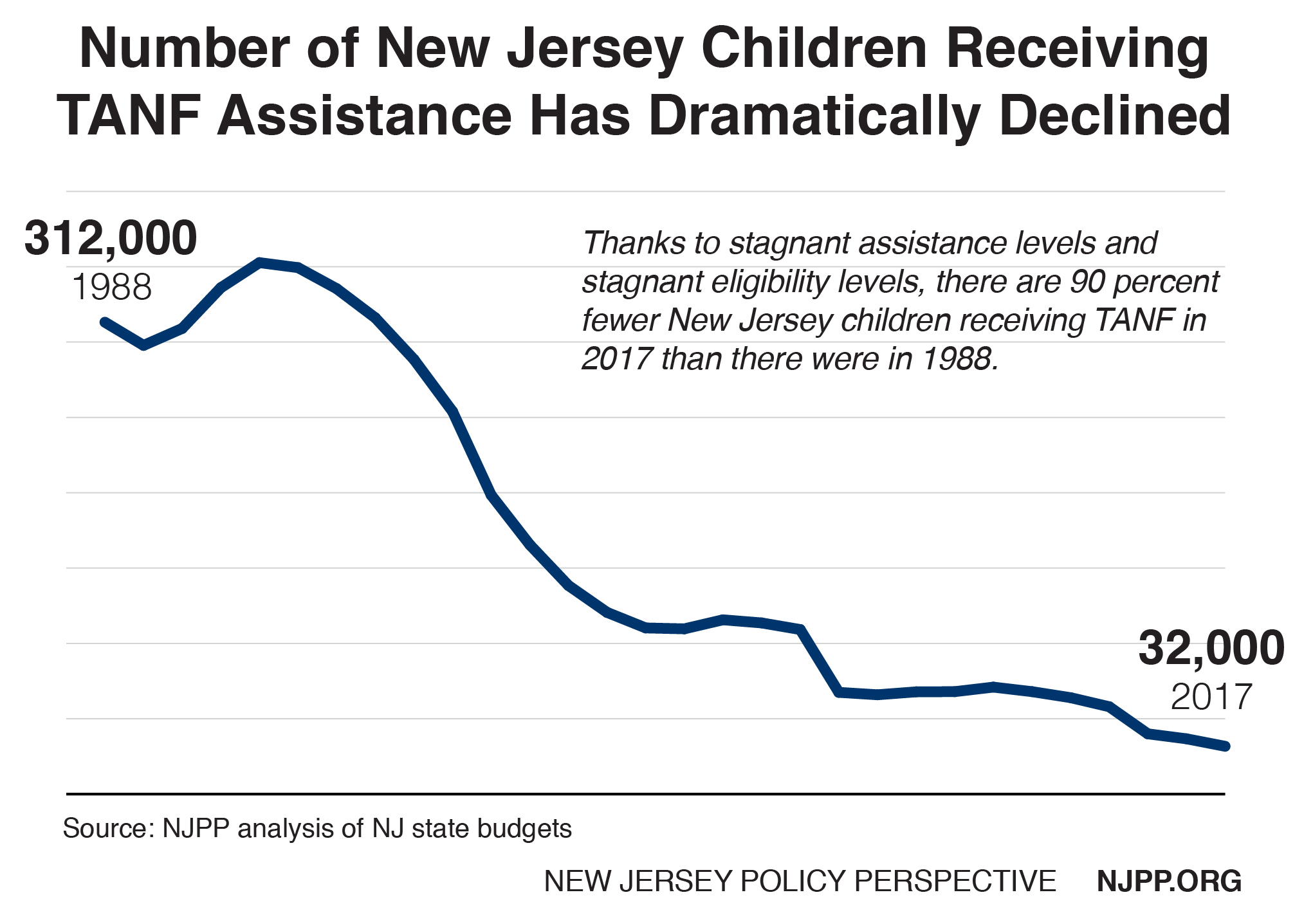
About 9 in 10 New Jersey children living in poverty did not receive any TANF support in 2015. In that year there were 302,000 children below the federal poverty level.
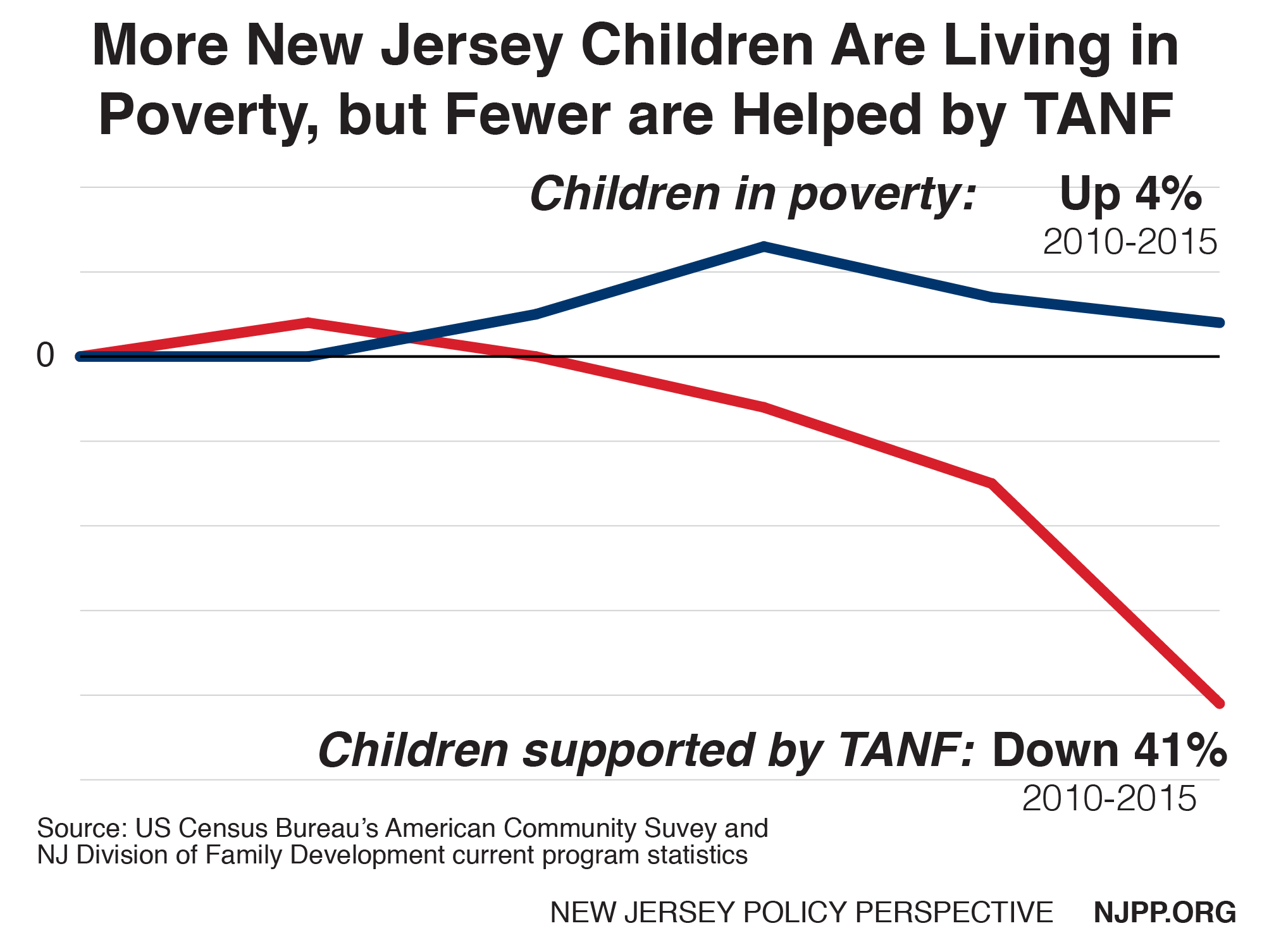
Even when child poverty increases, TANF does not respond accordingly. In fact, while the number of New Jersey kids living below the federal poverty level rose by 4 percent from 2010 to 2015, the number of children receiving TANF benefits decreased by 41 percent.
And the number of children receiving TANF assistance continues to drop at an alarming rate. As of February 2017, only 31,000 children remain in TANF. At this rate, TANF will essentially disappear as a safety net within a few years.
New research shows that deep poverty causes severe losses in brain development in children that can affect them for the rest of their lives. This is one of the main reasons why many states have recently increased their TANF levels.