
Blog

Support for State’s Poorest Kids Continues to Dwindle


New Jersey needs to follow the lead of other states and invest in its kids.

Published on Jun 5, 2017 in Economic Justice, Tax and Budget

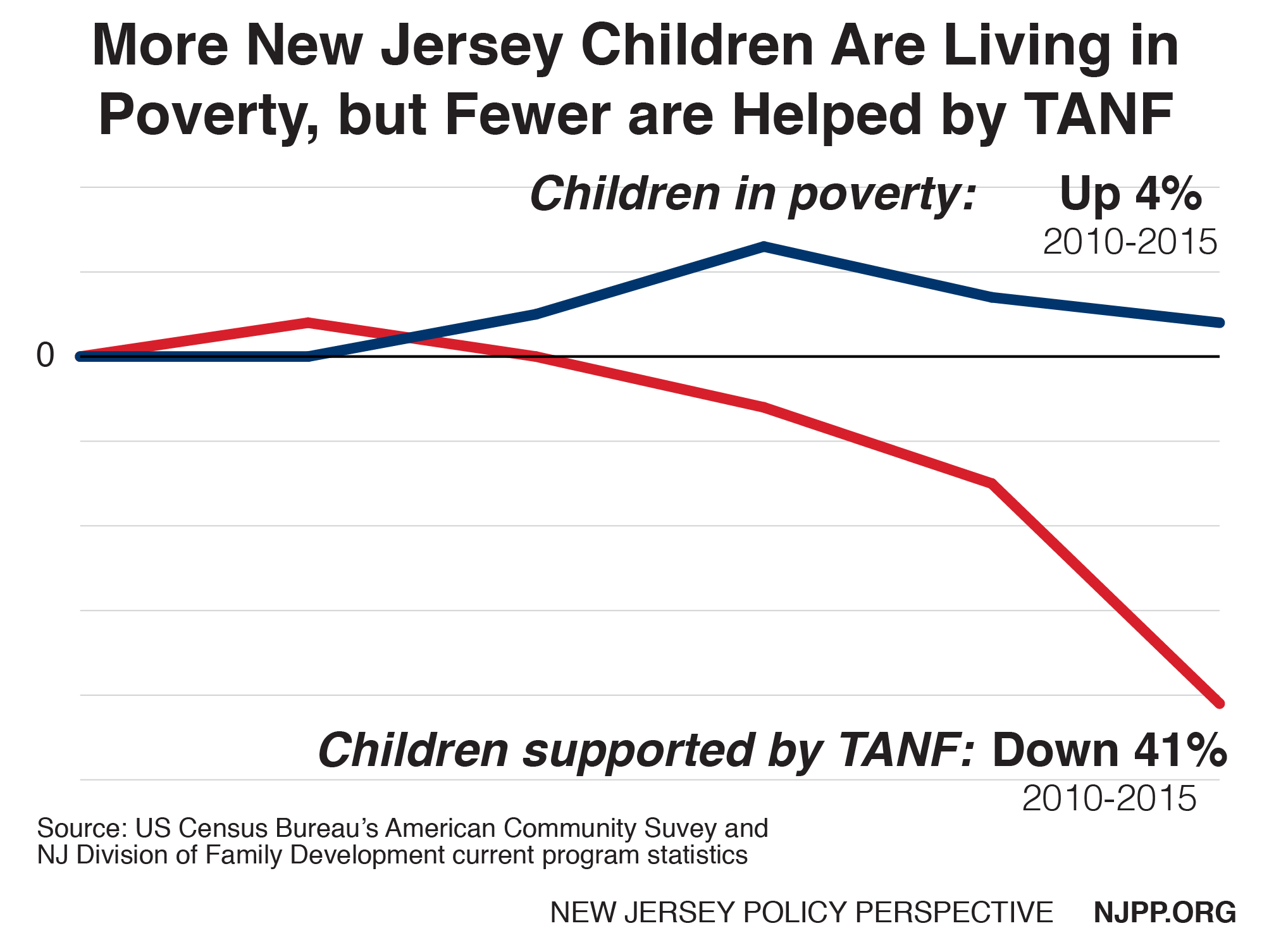
Last year, NJPP released a groundbreaking report that pinpointed the state’s stagnant cash assistance levels as a major cause of child poverty in New Jersey.

The report, and vigorous advocacy spearheaded by NJPP and key partners, led to swift legislative action: The legislature passed the first increase in TANF assistance since the late 1980s and – following the lead of many other states – repealed the punitive “family cap” policy. But the path to progress was blocked by Gov. Christie, who vetoed the modest boost in help for the state’s poorest families and children.

Fast forward to today: While it may be hard to believe, the situation has gotten even worse for New Jersey’s kids in just one year. Last year New Jersey had the 10th lowest TANF assistance level compared to other states – and this year it dropped to 7th lowest, falling behind states like Texas and Oklahoma, as we note in a new Fast Facts update.

New Jersey needs to invest in children like other states are doing – not ignore them like it has for the last 30 years.

Author

  • Ray Castro was formerly the Director of Health Policy for NJPP. In this role, he worked to improve the health outcomes of New Jerseyans by producing reports, testifying in legislative hearings and working with advocates, legislators and their staff, and other key stakeholders to change policy and boost families in need.

    Ray’s research interests include: the Affordable Care Act, universal health coverage, NJ FamilyCare, health care transformation, poverty, the social safety net, public assistance and working family tax credits.

    Before joining NJPP in August 2006, Ray worked for the New Jersey Department of Human Services for more than 30 years, mainly serving as the Director of the DHS Office of Legislative Services in the Commissioner’s office. He was closely involved with developing federal and state legislation relating to Medicaid, mental health, welfare reform, child protective services, child care and other work support programs, and helped develop the policy and legislative strategy that led to New Jersey’s state Earned Income Tax Credit.

    He received a BA in psychology from the University of California-Berkeley and holds a master’s in social work degree with a specialization in policy from Rutgers University.