
Yesterday news reports surfaced that David Tepper, once the wealthiest resident of the Garden State, has decamped for Florida. The article said that “family considerations” were the “main factor” behind Tepper’s move. But that didn’t stop some pundits and lobbyists who’d like to cut taxes for other wealthy families from pointing to taxes as another key factor. That chorus will likely grow louder, and Tepper’s move will likely become part of the well-worn tale about how New Jersey can’t seem to hold onto wealthy people, because our taxes are too damn high.
The problem with that tale is it’s just not true.
In fact, New Jersey continues to be a top state in its ability to grow wealthy residents, who come or stay here for well-paid jobs and excellent opportunities for their careers and their families. A few quick facts:
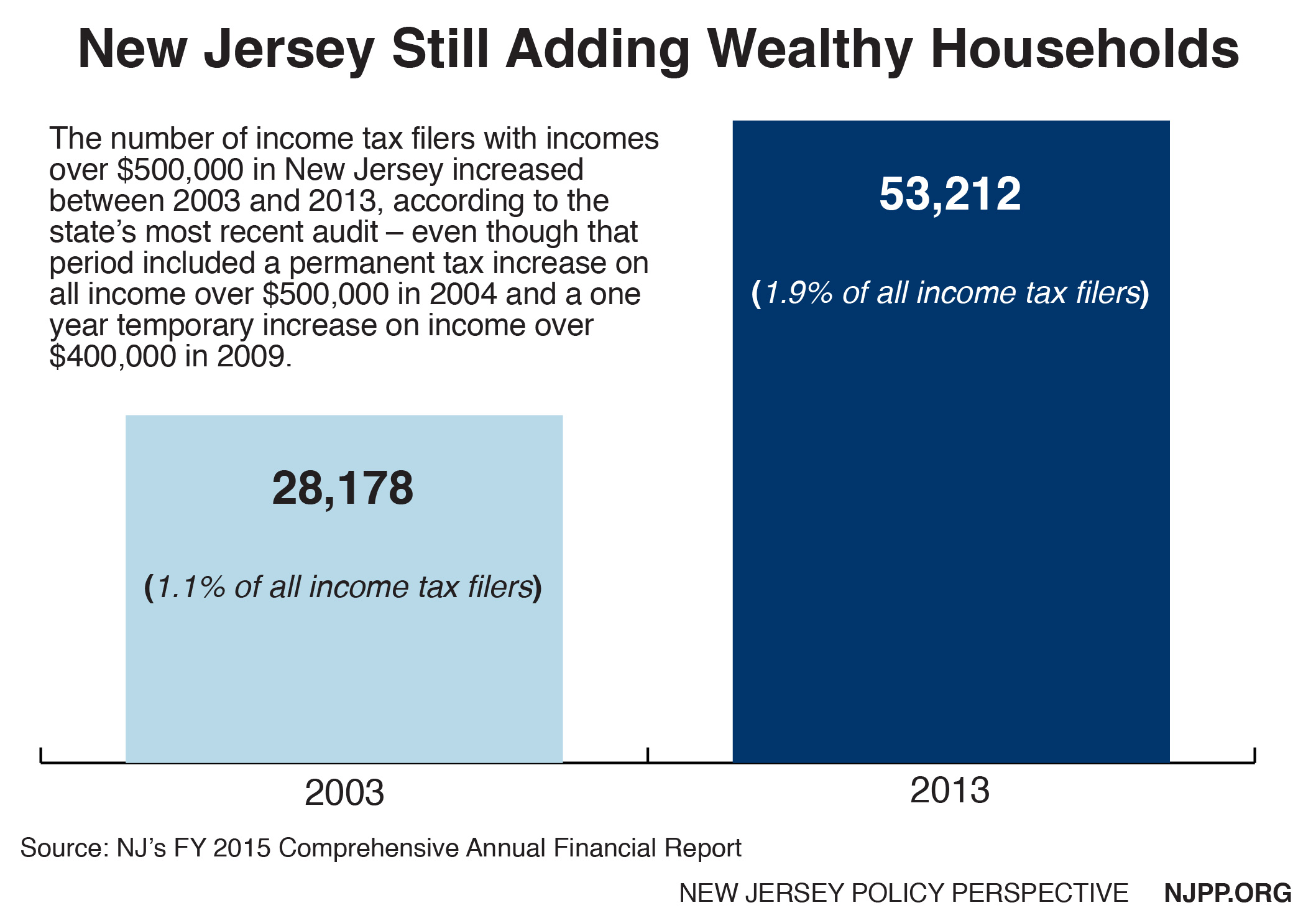
Between 2003 and 2013, the number of New Jersey households with incomes over $500,000 increased by 89 percent, jumping to 53,212 from 28,178, according to the state’s annual comprehensive financial audits. It’s worth noting that this growth occurred during a time that income taxes were raised not once but twice on these wealthy households.
New Jersey also has the third most millionaire households on a per-capita basis in the nation, according to one wealth management firm’s estimates. And the share of these households, with over $1 million in “investable assets,” has grown to 7.1 percent of all households in 2014 from 6.5 percent in 2006, representing an increase of about 25,000 millionaire households.
The bottom line is that while New Jersey may lose some wealthy residents in any given year, such as Mr. Tepper, the so-called “exodus” of wealth is a manufactured crisis created by lobbyists who are seeking to reduce taxes for corporations and the wealthy – and it has no basis in reality.