
The following is a summary of this report. For the full report in PDF format, click here.
As a new administration and legislature take the reins in Trenton, New Jersey has a historic opportunity to guarantee that all children in the state have health coverage.
New Jersey has already made progress toward this goal, but more can – and must – be done.
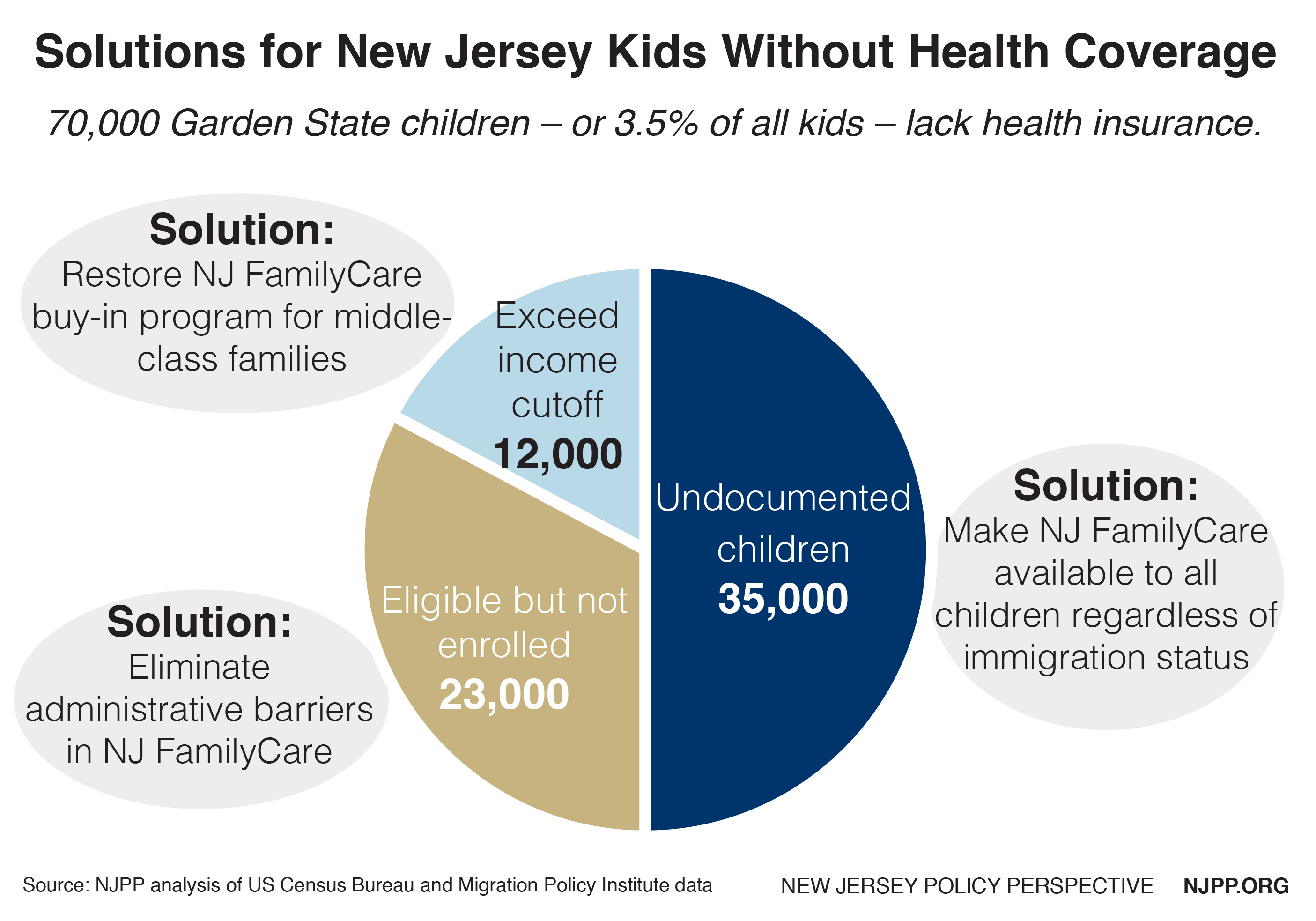
The state has reduced the uninsurance rate for children to 3.5 percent – a major accomplishment. But there are still 70,000 children who remain uninsured, and 20 states – including every Northeastern state but Maine – have even lower rates. What’s more, New Jersey has one of the largest disparities in health coverage between white and Hispanic children in the nation, with Hispanic kids more than 3 times more likely than their white neighbors to be uninsured.
Of these 70,000 uninsured New Jersey kids, half (35,000) are undocumented immigrant children who are not eligible for NJ FamilyCare coverage and an additional 12,000 are kids in middle-class families who can no longer buy into NJ FamilyCare, since New Jersey ended the buy-in program in 2014. The remaining 23,000 uninsured children are eligible for NJ FamilyCare but are not participating due to administrative barriers and a lack of intensive outreach.
NJPP’s report identifies 10 actions the state should take to make healthcare coverage through NJ FamilyCare accessible to all children, including:
- Stop excluding children because of their immigration status
- Reinstate the buy-in program for middle-class families
- Remove administrative barriers that prevent eligible children from enrolling, like locking kids out of coverage for 90 days if a payment is missed
Insuring these uncovered children is not only a moral imperative for New Jersey, it is cost-effective, incremental, realistic and affordable – important considerations given the state’s bleak financial situation. In fact, investing in the wellbeing of these kids now will likely save the state money in the long run.
NJPP estimates it would eventually cost $66.5 million a year – or less than one half of one percent of all Medicaid expenditures – to cover the state’s undocumented immigrant children. That is a third-year cost; the first year cost to the state is much less, at $10 million. What’s more, these estimates do not include state savings that would be achieved in charity care, other federal funds the state can claim for emergency care, and long-range health and social savings resulting from better health for kids. NJPP recommends an additional $2 million in state funding for outreach – an excellent investment because the $2 million would be immediately matched, and then the state would obtain even more federal Medicaid funds to help cover the additional children who are enrolled. And there is zero state cost to reinstate the buy-in program for middle-class families (they pay the full cost of coverage).