
Blog

Increasing New Jersey’s EITC to 40 Percent Would Make Tax Structure More Equitable


If policymakers increase the EITC to 40 percent, New Jersey's poorest households would still pay the largest share of their incomes towards taxes, but not by nearly as much.

Published on Mar 9, 2016 in Tax and Budget

Increasing New Jersey’s Earned Income Tax Credit (EITC) could boost the incomes of nearly 600,000 working families in the state who aren’t paid enough to get by, lift or keep many of these people out of poverty and give kids in these families a better shot at success later in life, as my colleague Brandon McKoy noted in legislative testimony earlier this week.

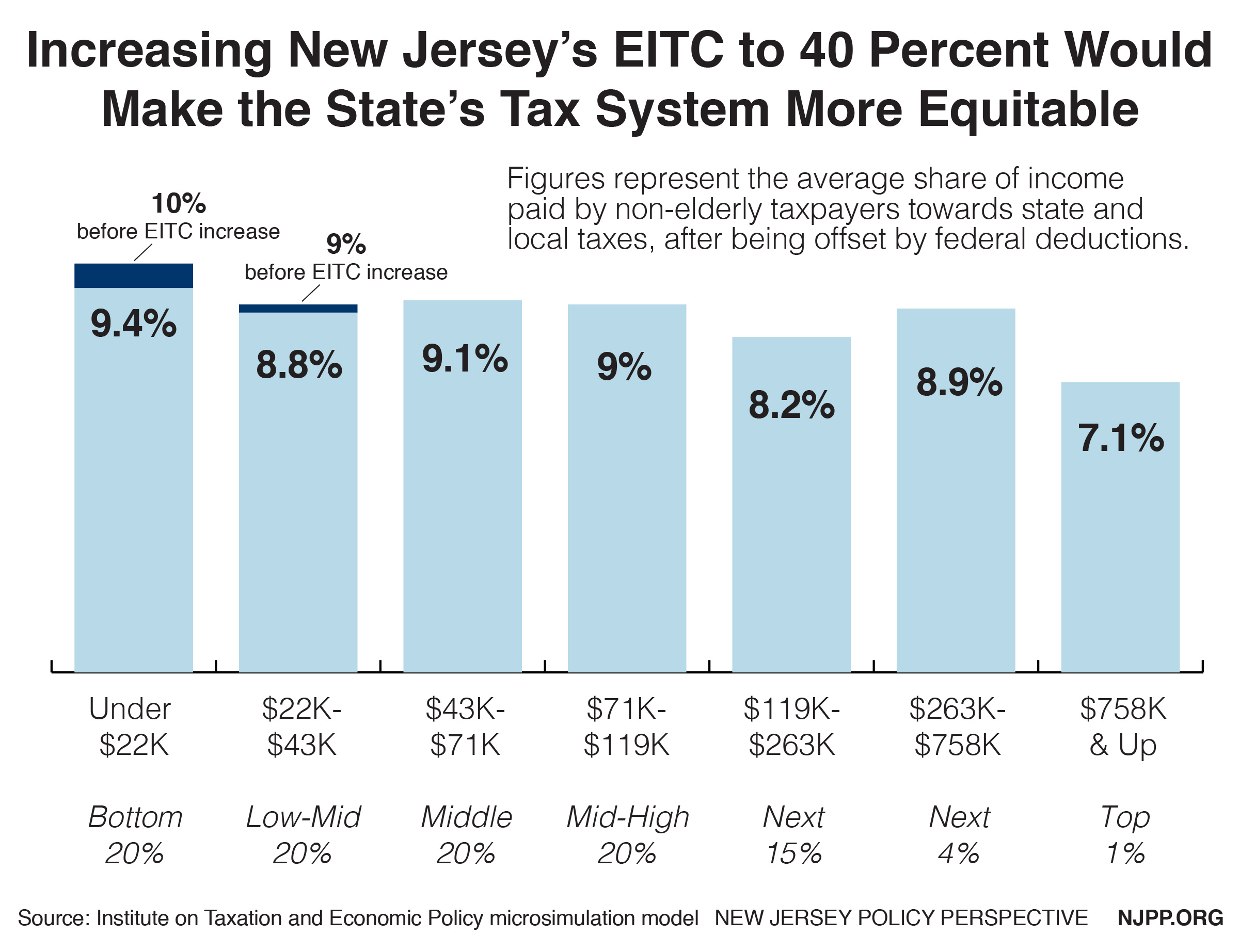
But increasing the state EITC to 40 percent would also help make New Jersey’s state and local tax structure more equitable by reducing the share of income the state’s residents contribute in taxes.

As it stands now, New Jersey taxpayers who make less than $22,000 a year – the bottom 20 percent – pay the highest share of their income towards state and local taxes. That’s because, even with a state income tax that is highly progressive and based on the ability to pay, other state and local taxes – namely property and sales taxes – are regressive and help tip the overall scales of the structure out of balance.

If policymakers increase the EITC to 40 percent, those poorest households would still pay the largest share of their incomes towards taxes, but not by nearly as much.

whopayseitcto40-01

Author

  • Jon Whiten was formerly the Vice President for NJPP. In this role, he worked with the Board and leadership team to shape and execute NJPP's mission and strategic vision. He also led NJPP’s strategic communications efforts, managed its finances and operations, researched key economic justice issues and engaged in advocacy and outreach.

    Jon's research interests include but aren't limited to: economic development, corporate taxes, the minimum wage, working family tax credits and transportation.

    Before joining NJPP in October 2011, Jon worked for a decade as an editor, writer and entrepreneur, including as the founding editor and publisher of the Jersey City Independent. He has previously served as an editor for the Association of Alternative Newsweeklies, a fact-checker for Columbia Journalism Review and an assistant editor at a community newspaper chain in Northern Virginia. His freelance work has been published in a number of national and local publications.

    Jon currently serves as the Deputy Director of State Communications at the Center on Budget and Policy Priorities.


    Follow Jon on Twitter