
A decade after New Jersey made deep cuts to its public colleges and universities, state funding continues to lag behind pre-recession levels and students are struggling to cope. Students who already face the greatest racial and economic barriers to higher education are particularly at risk of being harmed by rising tuition and fees, and subsequently, rising student loan debt. This jeopardizes not only their futures, but that of the entire Garden State.
New Jersey is one of 19 states that slashed funding for higher education by more than 20 percent per student between 2008 and 2018, according to a new report by the Center on Budget and Policy Priorities. State lawmakers spent 22.6 percent, or $2,278, less per New Jersey student between 2008 and 2018, far outpacing the national average decline of 13 percent or $1,220 per student.
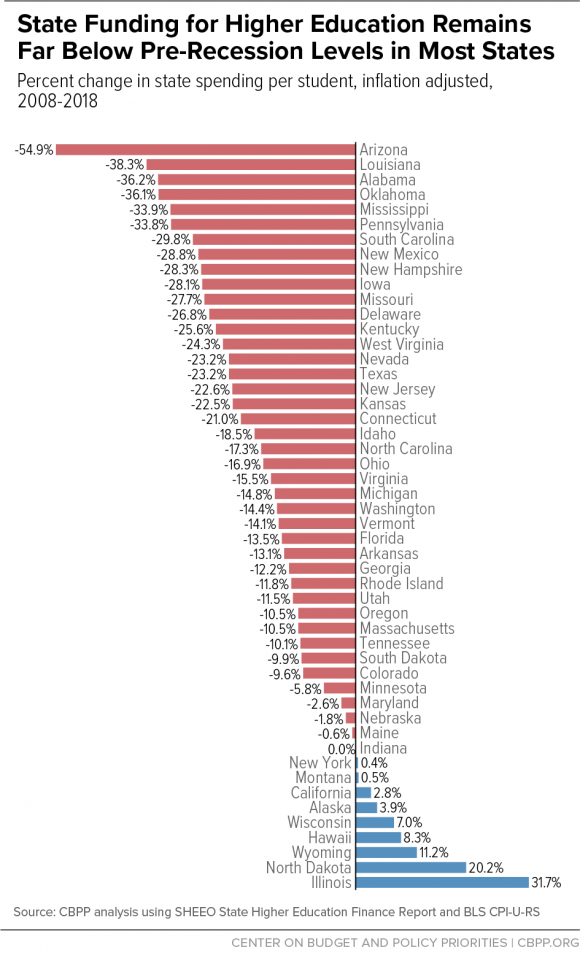
Years of cuts have helped drive up the cost of a college degree, imposing the greatest burden on families of color and those with low and moderate incomes. In New Jersey, the average tuition grew by 18.3 percent, or $2,121, between 2008 and 2018. For students priced out of attending college, the costs are much greater in the long-term as they will not benefit from the greater lifetime earnings that come with having a college degree.
Growing tuition and fees costs also make up a growing share of New Jersey residents’ household income. In 2017, the average price of attendance accounted for 20 percent of the median household income. For Black and Latinx households, the price of attendance accounted for 32 percent and 29 percent of households income, respectively.
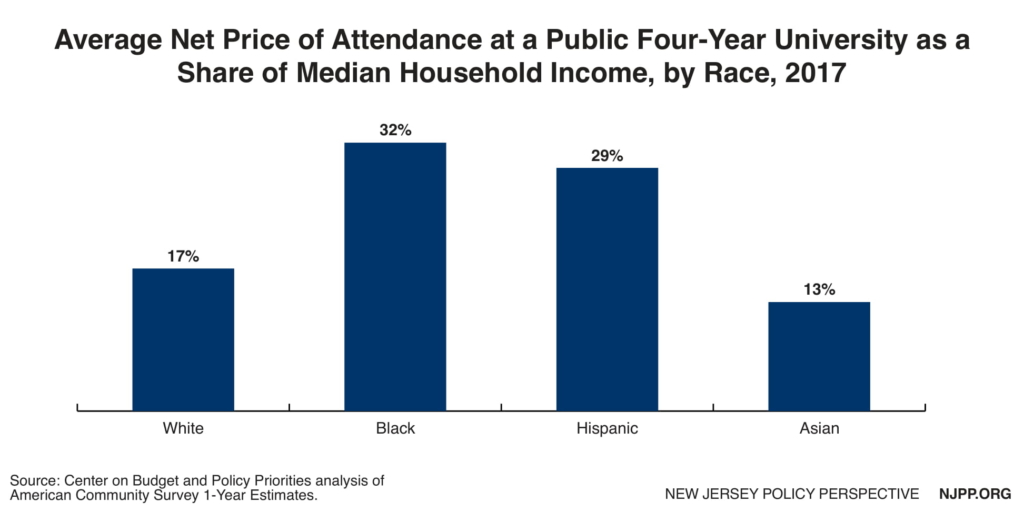
Higher tuition and fees can result in sticker shock, where students are dissuaded from enrolling in college even if the net price (including financial aid) doesn’t rise. Increases to costs of attendance also reduce campus diversity, especially among students of color and those from households with low incomes.
Public colleges and universities are important factors in the future success of New Jersey’s students, communities, and the broader economy. Affordable higher education opens the door to widespread opportunities, while being plagued by insurmountable student loan debt does not. Reinvesting in higher education will help ensure that the benefits of higher education are broadly available to all, not just for those who can afford it.